
Matthew Dennis explores Mechelen’s Burgundian grandeur, Renaissance streets, craft beer and authentic Belgian culture…without the tourist crowds.
Arriving in a city at night is an odd feeling. Mechelen reveals itself to me first as a glow, shop windows casting pools of amber onto the streets, bars and restaurants framing scenes from the day.
At the Elizabeth Hotel, a converted old hospital, the Circle of Energy by Dutch artist Jan Van Munster a huge, illuminated circle is suspended, incongruously, above the cobbled streets. Once checked in, I open my room door and am about to drop the keycard into the electric slot when I see the glowing visage of St Rombold’s tower illuminated against the dark sky and perfectly framed by my dark room, glowing in the window. Leaving the light off, I take a moment to stand in the darkness. ‘Wow! That looks incredible.’ I think to myself and feel the excitement for the next day’s exploration begin to build.
Mechelen is a small city of around 90,000 people in the Flanders region of Belgium. It has a history entirely disproportionate to its size. Between 1507 and 1530 it had risen so far as to become the official capital of the Netherlands and the home of Hapsburg Emperor Charles V under the regency of Mechelen’s great patron Margaret of Austria. The Burgundian golden age left Mechelen with a Renaissance architectural legacy that rivals Bruges.
A Burgundian Legacy Without the Bruges Crowds
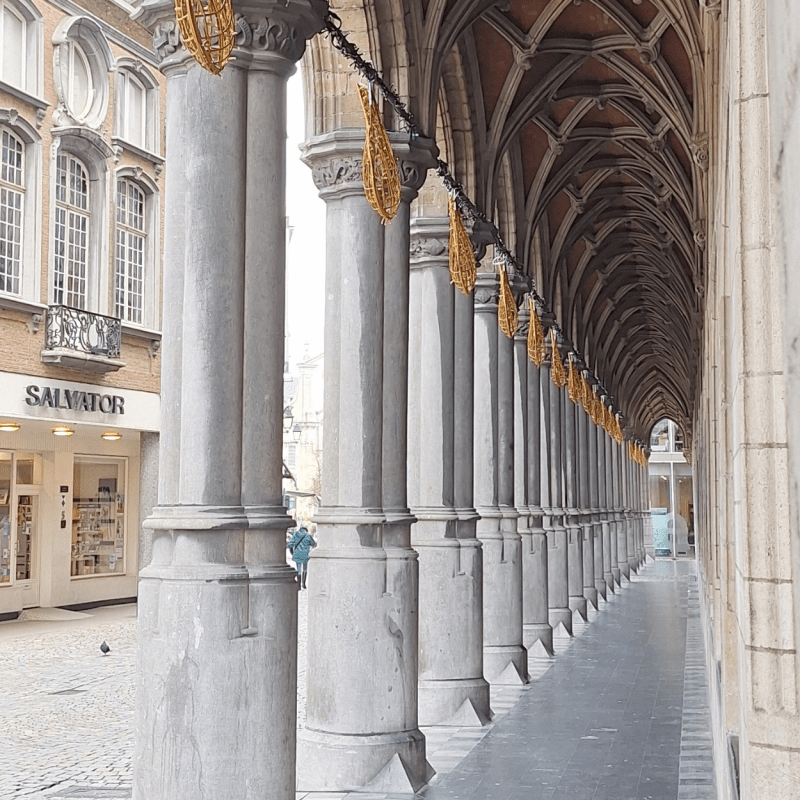
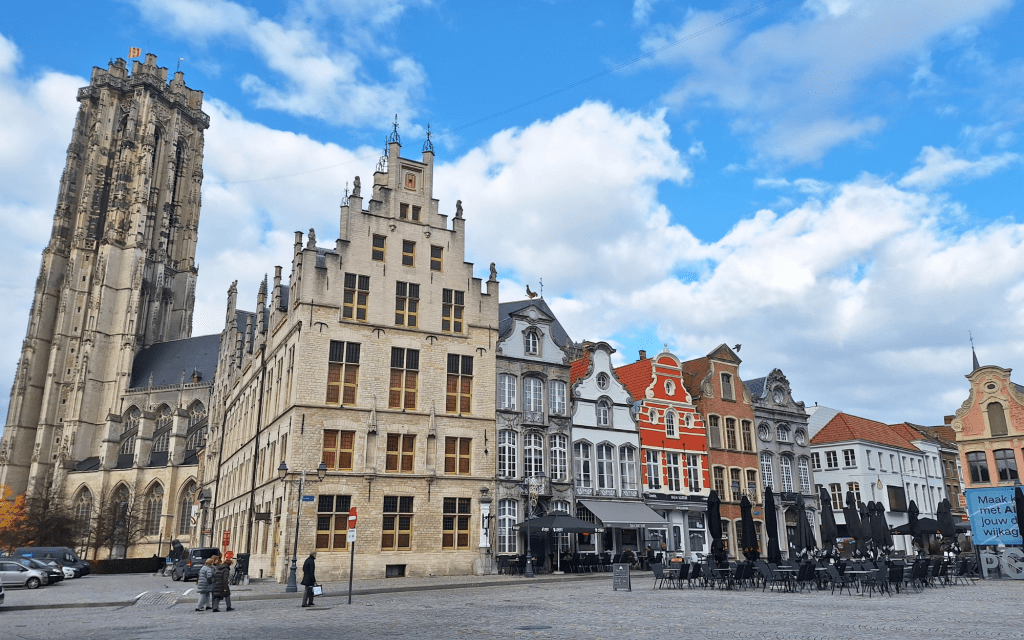
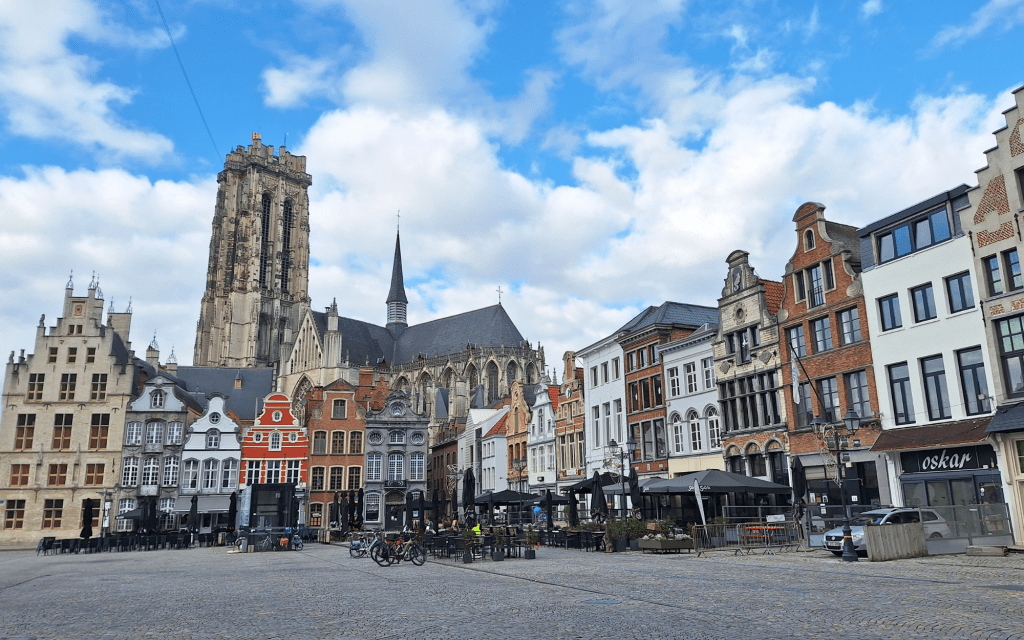
The next morning, bundled in scarf and jacket I stepped out onto the street. It had touched freezing last night and the tingle of the crispness on my face and the plumes of steamy breath made me smile, this was the first frost of the year. I headed straight for the Grote Markt at Mechelen’s heart. History and contemporary coolness are highlighted in this wonderful spot. To one side of me there are rows of bars and cafes that tumble out into the street. Some look trendier and well-polished, some a little more traditional but they all bustle with morning life of locals. The smell of fresh coffee and freshly baked pastries lingers in the air and draws me towards them. Behind me, the cobbled square is bordered with 16th century renaissance and 18th century rococo buildings. On one side stands the City Hall designed in an impressive mixture of gothic and renaissance architecture. Standing, sentinel, over this scene is St Rombold’s Cathedral and tower, originally planned to be 168 meters high, making it the tallest church tower in the world. Short of money, however it reached an imposing 99 meters. I sit and sip my coffee, surrounded by Mecheleners starting their days slowly, startled by the grandeur of a city I’d never heard of until a few weeks ago.
The wonderful thing about small cities is the creativity of the people who promote it. Later that day I get to meet Lente De Vil from the Mechelen Tourist Board, who tells me about their projects and about the city. The things she comes back to time and time again is that the city is filled with locals. It is living, breathing and operating without the express need for tourists. Unlike its larger cousins of Bruges and Brussels who see peak numbers of tourist levels, which can give a different experience, Mechelen is a much quieter and calmer destination.
. Both she and, later, my guide Karine De Coster, both locals, re-iterate that any restaurant in the city is going to be fairly priced and will rely on their reputation. Refreshing!
Listening to History at Street Level
Lente talks of the some of the innovations that have been designed and there is one that catches my eye…. or ear.
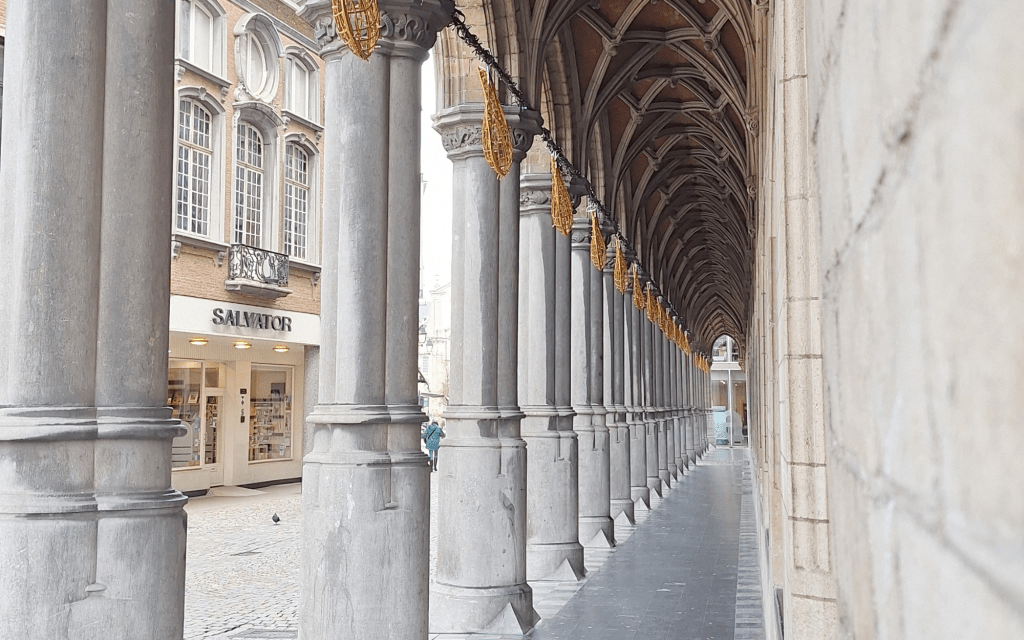
‘If Walls Could Talk’ is a trail which leads you on a voyage of discovery through the city. The full route is 3.5km but there are shorter options available. The genius of this tour is in the ear-trumpet that you are provided with. In 11 locations around the city, I’m able to hold the trumpet to my ear and eavesdrop a conversation of people who lived there across Mechelen’s history. In the Kraanbrug (crane bridge) I listen into dock workers discussing the comings and goings in the city, at St Rumbold’s tower I eavesdrop on the masons building the tower. It brings the history to vibrant life in my mind. There are also QR codes which allow virtual views and greater detail of info if you wish. From The Cloth Hall to Palace of Margaret of York to the Palace of Maragaret of Austria and beyond the era of Burgundian glory in Mechelen becomes fixed in my mind.
The team at Visit Mechelen have also devised other trails and tours which merge history and culture. Several themed shopping routes have been set, the exclusive route, the couples’ route, Mechelen like the local’s route and it’s wonderful to visit these shops where the owners have time to chat. There is also the fantastically titled ‘Mmmmm Mechelen’ culinary route which leads wonderers to various restaurants that have developed delicacies with ingredients from the past.
Where Locals Actually Eat and Drink
Which leads nicely into Mechelen’s food scene and nightlife scene. For a city that has such a relaxed vibe I was taken aback by just how many options there are available. Bier Central on the Grote Markt specialises in providing a huge selection of one of Belgium’s primary specialities, craft beer. The beer menu is really a guidebook and selecting was my most difficult task, although I chose a fine crisp local brew called Gouden Carolus which tickled my taste buds perfectly. Another fine choice is De Gouden Vis, a bar much more reminiscent of the 1940’s, with cast iron tables and bare wood floors that oozed pre-war character.
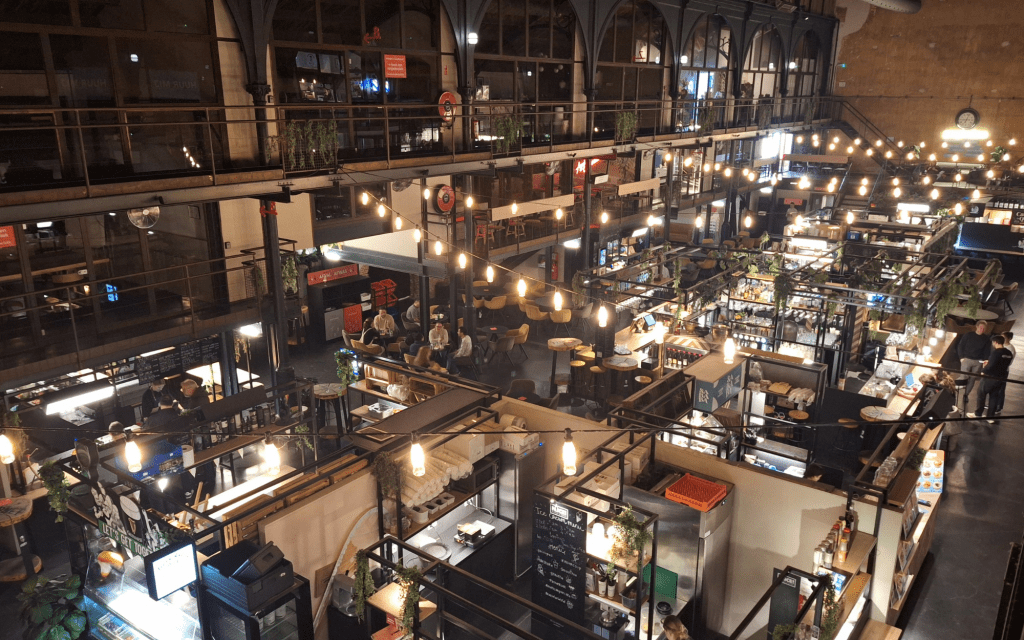
The food scene buzzes too, in the heart of Mechelen, I’m also directed to De Vleeshalle, the old meat hall that has been converted into a modern culture hotspot. As I walk through the stylishly lit doorway, the wide expanse of De Vleeshal opens up. An open hall with food and drinks stands from around the world is flanked by three stories of specialist independent stores. In the food hall everything from Thai to Italian is available. As I tuck into my pho noodles I listen to the buzz of families out for their evening meal, couples on dates and work friends relaxing at the end of the day. A vibrant mixture.
Mechelen also has many more traditional restaurants such as Het Bestek which serve me with deliciously seasonal dishes such as Pumpkin waffle with chestnut and shallots and a hearty shakskuka that helped to warm me thoroughly.
A City That Belongs to Itself
It is a cliched term, but Mechelen really does feel authentic. As I wonder through the medieval and renaissance streets with my guide Karine, there are no other tour groups blocking the street. She tells me stories that had been told to her since she was young. She relates memories of older guides who remember growing up here. It feels personal. It feels Belgian, I felt like a guest rather than a tourist. The Mecheleners are proud of their city and rightly so, it belongs to them, and they are happy to share with travellers just what makes it so special.
As I jump in my cab to head to the station, I see St Rumbold’s Tower, this time not as a stranger arriving in the dark, now I’m someone that has been welcomed into a secret that the locals have known all along, a city doesn’t need the crowds to be magnificent.