
Matthew Dennis discovers Leuven’s 600 years of student life, gothic treasures, beer culture and low‑season calm in Belgium’s most vibrant university city.
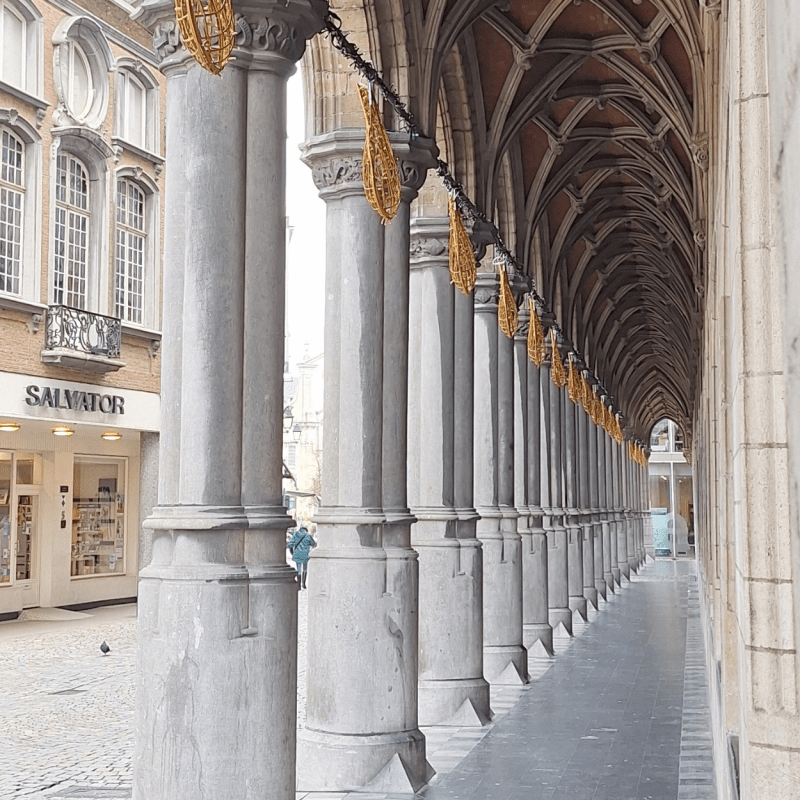
‘Let me show you something before we leave.’ Says my guide, Elsy Vandezande. She has a cheeky smile on her face as she leads me through the coffee shop in the University building. We pass students busy discussing the day’s lectures and locals enjoying a coffee under the cloistered arches of the hall. Standing next to a bookcase in the refectory shop, ‘What do you see?’ she asks. I look around and see University paraphernalia, hoodies, books, pens. She points to an inscription on the side of a bookcase that proclaims:
‘……. the world’s largest banana gene bank is located in …. Leuven. [The Laboratory at] KU Leuven stores 1,500 banana samples.’

Six Hundred Years of Students, Still Going Strong
‘Of course it does!’ I think ironically. It is 6 degrees centigrade outside; we’re in northern Europe and yesterday it was bucketing down. As far from the tropics as you could get. Both worldly and local, this is the juxtaposition that Leuven presents. It is a city with a 600-year history as a student centre (2025 marks the 600th anniversary) and whilst that presents a very academic front it also means that there is the life and vibrancy that comes with a student city particularly as this is the oldest catholic university in Europe.
As we leave refectory, Elsy tells me that the city is relatively small with a population of 100,000 people but in term time an extra 50,000 people, meaning that 1 in every 3 people in the city are students! Visiting Leuven in term time is essential, they bring a sense of vibrancy and highlight just how cosmopolitan the city is.

Where History Rises from the Ashes
We step out of the University Hall and she begins to weave the story of how the city unfolded talking about how the Old Cloth Hall was taken reassigned as the University Hall and all the challenges that the city has faced. At the top of Monseigneur Ladeuzplein, the neo-renaissance University Library dominates my view. Looking at it, I suppose that it would not have seemed out of place in Florence, however it was rebuilt in the 1950s. It was destroyed, along with its collection of books in 1914 and again in 1940, but like a phoenix, it rose from the ashes. 289 steps will take you to the top of the tower and give a panoramic view of Leuven. I skip the climb and head to the 44 meter long reading room. Clad in light oak panelling, adorned with carvings and two levels of long balconies it is an impressive sight made all the more atmospheric as it is full of students, perfectly silent except for the tapping of keyboards and not one other tourist in view.

November Evenings and Gothic Glory
We head a little further towards the centre to the spot where Tiensestraat and Muntstraat meet. I had stood here the evening before in the gentle November rain. Each road was illuminated by the warm glow of light from the bars and restaurants that fill the streets. Awnings provided shelter for the mix of students and locals who were settling in for the dark November evening in the embracing mix of hearty Belgian beer and the aroma of foods from around the world. In the daylight there is the gentle hum of discussion, people sipping coffee and hot chocolate, their shopping bags resting against the tableside. It is a snapshot of Leuven life.
At the bottom of the road is the crowning glory of Leuven, the city hall. I have travelled quite widely and seen some amazing buildings, but the Town Hall had me captivated. I stood, jaw slightly dropped, agog. The 30-year project of three master builders resulted in a gothic masterpiece. The three-story building rises above the Grote Markt. Every single space, niche and cranny is wonderfully carved. Plinths line each floor with a statue on each, the first-floor statues of city dignitaries, the second of patron saints and the third the Dukes and Counts of Brabant. It is simply stunning, almost too much to take in and I found myself returning here several times over the next couple of days, allowing myself to absorb it fully, no crowd or tour groups just me and no rush.
The Women Who Shaped Leuven
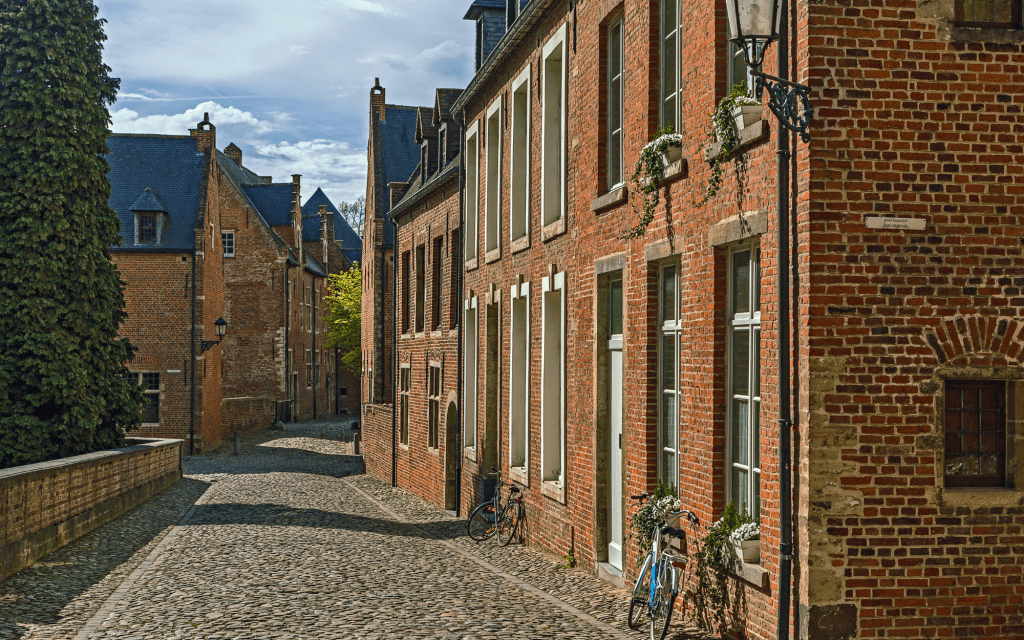
Women play a large role in the history of Leuven. Elsy takes me to the 13th century Great Beguinage, the women’s town within the city. This was a female only area of the town for women who did not want to be Nuns but wanted to live together. At its height 360 women, known as beguines lived and worked together in the UNESCO listed series of alleys, courtyards and gardens. These cobbled streets are quiet as we explore deeper into the town, a maze of red bricked houses and alleys on both sides of the river Dyle. I wonder at the sense of community that must have existed in this enclave that is now a new community inhabited by students and professors. It had adopted a new life.
Although Leuven was one of the later Universities to accept women in the Low Countries (1920), now over 50% of the student population is female. Elsy tells me the story of the dormitory in which the first female students were housed under the watchful eye of Nuns. She chuckles, telling me of the Italian Romeo who had once fallen for one of the female students, but there was no way to visit her without being caught by the nuns. The resourceful young man decided to dress as a cardinal and talk his way into the building. Rather remarkably he succeeded in getting to the room of his amour, before his ruse was discovered and he was forcibly ejected.
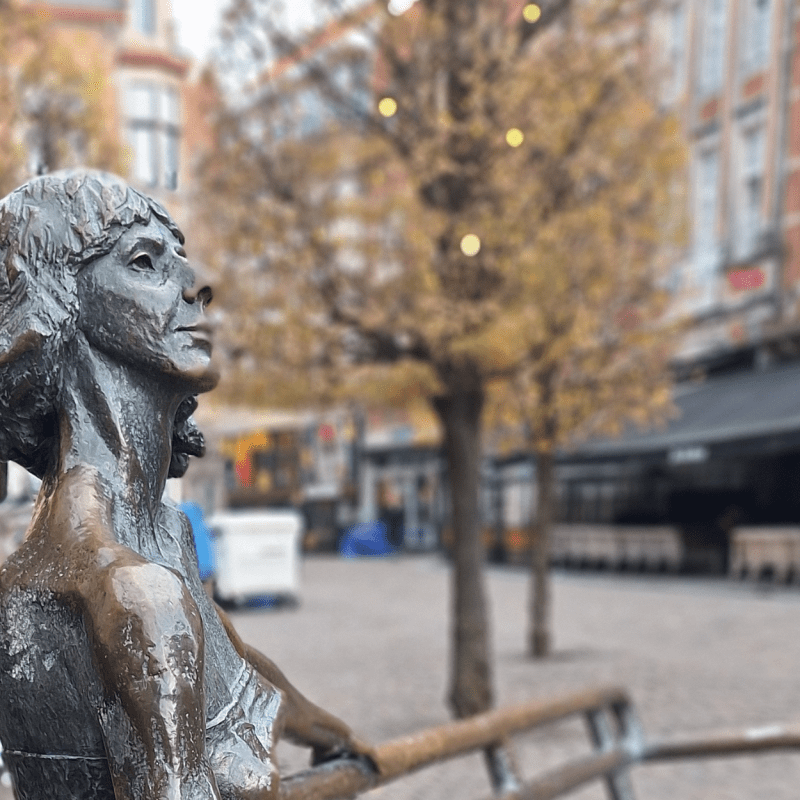
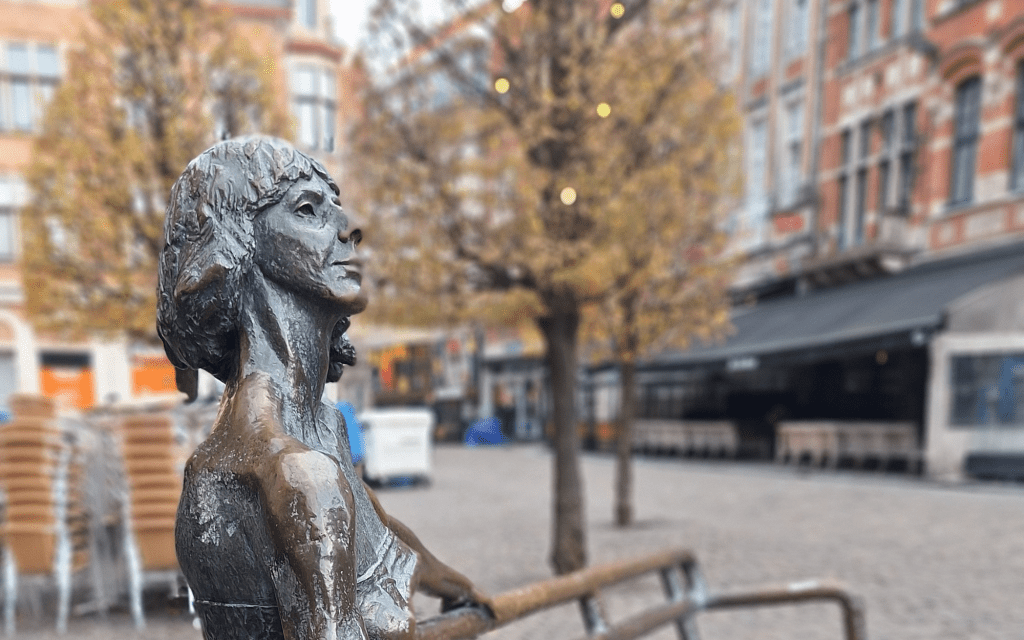
The Oude Markt also has its marker for the impact of women on the city containing the statue of De Kotmadam (the Landlady). She embodies the caring role of the landlady who rents out rooms to student and becomes their temporary keeper. Rather neatly the Oude Markt is also known as the ‘Longest Bar in Europe’, and at night its bars are filled with students and locals’ side by side.

Beer, Community, and Conversations
The history of Leuven is also tied to beer as it is the home of the Stella Artois Brewery. In fact, in a devious marketing ploy Stella allows glasses of beer to be sold at €1 in certain student only bars. Trying to avoid the larger corporate breweries I head to the suburbs for a brewery tour of a local brewer. Bart and Ine welcome me to their ‘nano-brewery’, the Brouwerij De Coureur, tying two of Bart’s passions together, beer and cycling. Inside a converted garage in a residential area of Leuven, the steel fermentation tanks shine as I chat to Bart. It’s clear that this small-scale artisan production within a community is intertwined with his Leuvenairs identity. He positions his brewery as a gathering spot for the locals but also indicates its current clientele, a group of German brewers come to learn what he does. Learning and community, the Leuven life.
Why Leuven Works
“One more thing,” Elsy had said at the beginning, leading me to that banana gene bank inscription. I’d laughed at the absurdity, tropical fruit research in freezing Belgium.
But now, leaving Leuven after two days, I understand. The banana collection makes perfect sense. This is a city that has, for 600 years, gathered the world’s knowledge into one small Flemish space. Where else would you store 1,500 banana samples alongside medieval manuscripts and the smartest students in Europe?
Leuven doesn’t shout about its treasures. It doesn’t need to. The Town Hall will still be there, carved in impossible detail, whether you see it or not. The reading room will still be full of silent students. Bart will still be brewing in his residential neighbourhood. The city belongs to the Leuvenairs, and in November, when the tourist tide recedes, they graciously let you glimpse their secret, that Leuven has always been magnificent, it just doesn’t need an audience to prove it.